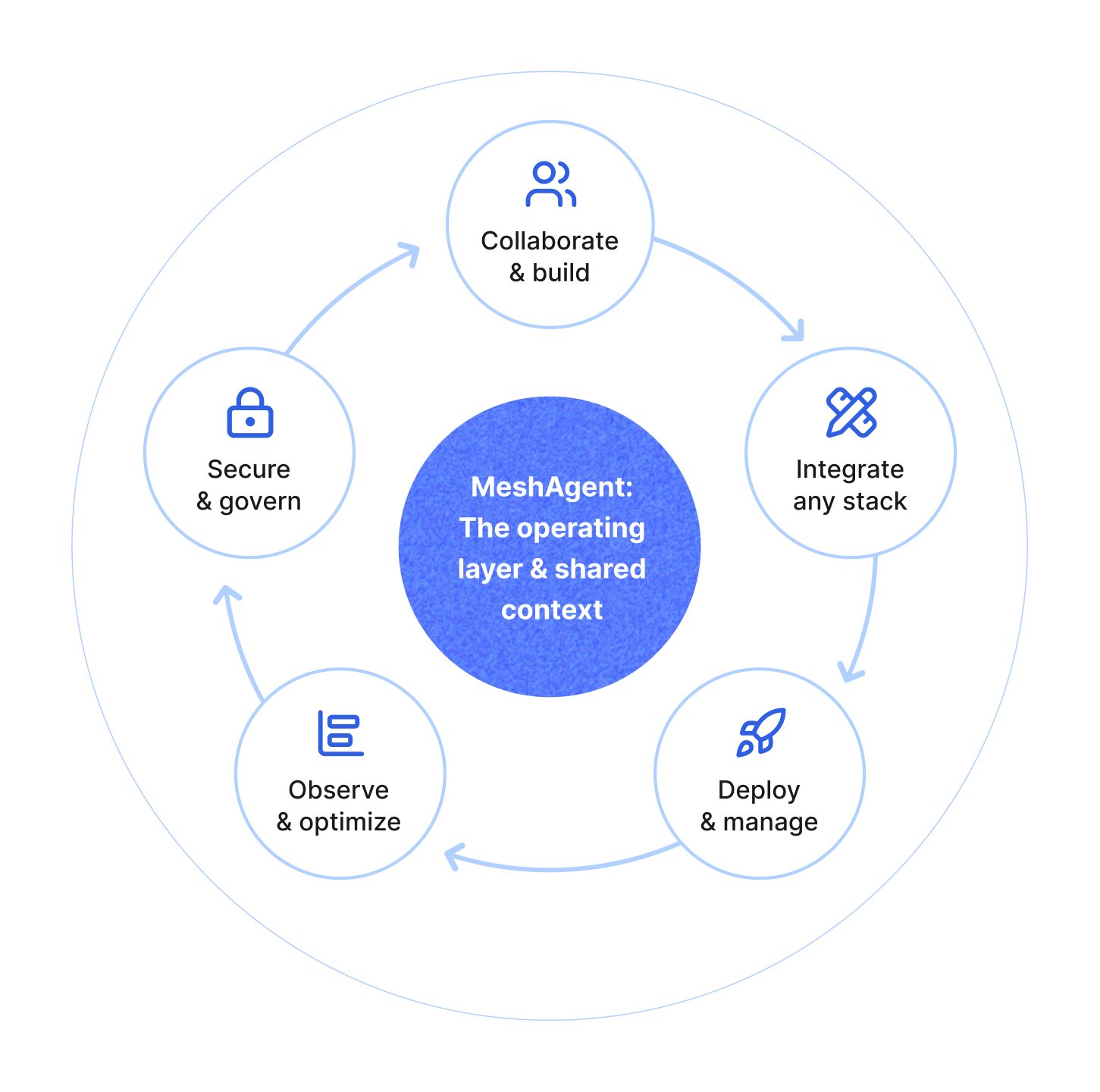
MeshAgent 0.43 focuses on process agents, Codex workflows, and TypeScript room apps. Agent chat messages now carry backend and model metadata, meshagent-codex runs through a dedicated process and thread-storage stack, room websocket clients can connect through the IAP-aware room-connect flow, LiveKit helpers moved into their own TypeScript package, and chat/tool events preserve timestamps and annotations across SDK boundaries.
Process-backed agents can now carry backend metadata through conversations. MeshAgent agent messages and chat/session APIs include that metadata on thread starts, turn starts, model changes, and realtime audio commits.
A room-connected agent can expose backends such as llm, codex, or chat, and clients can keep the selected backend attached to the thread and turn messages that need it. The supervisor can route work to the selected backend, switch a thread to another backend when requested, and require explicit backend selection when a multi-backend setup would otherwise be ambiguous.
Applications with more than one agent mode can use the same room conversation surface for a general chat model, a coding backend, and a direct human-chat backend while preserving the backend context needed to replay and continue the thread.
meshagent-codex now runs through a dedicated process, supervisor, and thread-storage stack. Codex thread storage can be used directly when a workflow needs Codex-native thread IDs, and MeshAgent adds thread inspection and diagnostics around those sessions.
The CLI process flow also supports local process runs without a room when room-backed tools are not needed. In that mode, room-required options are rejected up front and ephemeral storage is used by default, so local agent tests can run before a process is wired into a live room.
This release also removes the hard dependency on a Codex binary wheel and vendors the OpenAI Codex client into the Codex package. Codex can now run through the same process-agent path as other backends.
Command loading is lazier, so large command groups do not need to be imported during startup. meshagent ask now supports paste and dropped-file handling for images, PDFs, and files, and the ask TUI includes thread sidebar controls.
meshagent create also adds a TypeScript Room Workspace starter for apps that combine chat, meetings, and files. The template is designed around a room-authenticated app route and can be paired with a Codex agent in the same room when the Chat tab should talk to Codex.
Together, those commands cover both sides of that workflow: scaffold a workspace-style room app, then bring an agent into the same room.
MeshAgent 0.43 updates room websocket authentication for IAP and browser/Node environments. SDKs add IAP-aware helpers such as withIAP() and route room connections through /.well-known/meshagent/room/connect when a deployment wants the browser session to provide authentication.
The TypeScript SDK also separates LiveKit helpers into a dedicated @meshagent/meshagent-livekit package and adds a Node room websocket proxy helper for local development servers. Browser websocket auth uses MeshAgent room subprotocol tokens, while Node can use bearer headers.
Room apps, meeting experiences, and local Node services now have separate package entry points for LiveKit and Node websocket proxying instead of pulling those helpers through the core TypeScript SDK.
Agent messages and events now carry created_at timestamps through Python, TypeScript, and Dart paths. Live chat clients preserve room message timestamps when turning room messages into session events, so thread lists, live updates, and replayed conversations can use the original message order.
Public room toolkit listings now preserve annotations, tool listings carry annotations with tools and participant IDs, and the Python agent tooling stack supports Responses tool namespaces and tool search.
Applications that show live agent work, search for available tools, or replay conversation history can read timestamp and toolkit metadata directly from the SDK models.
In 0.43, process agents carry backend context through conversations, Codex uses the process-agent stack, TypeScript room apps get separate LiveKit and Node helpers, and live chat clients preserve original message and tool metadata.
Join our Discord community to keep up with MeshAgent releases, ask questions, and share feedback with the team.
Check out the MeshAgent documentation to start building today.

MeshAgent Studio, SDK, and Server give you everything to build, test, and deploy agentic applications, from development to production.