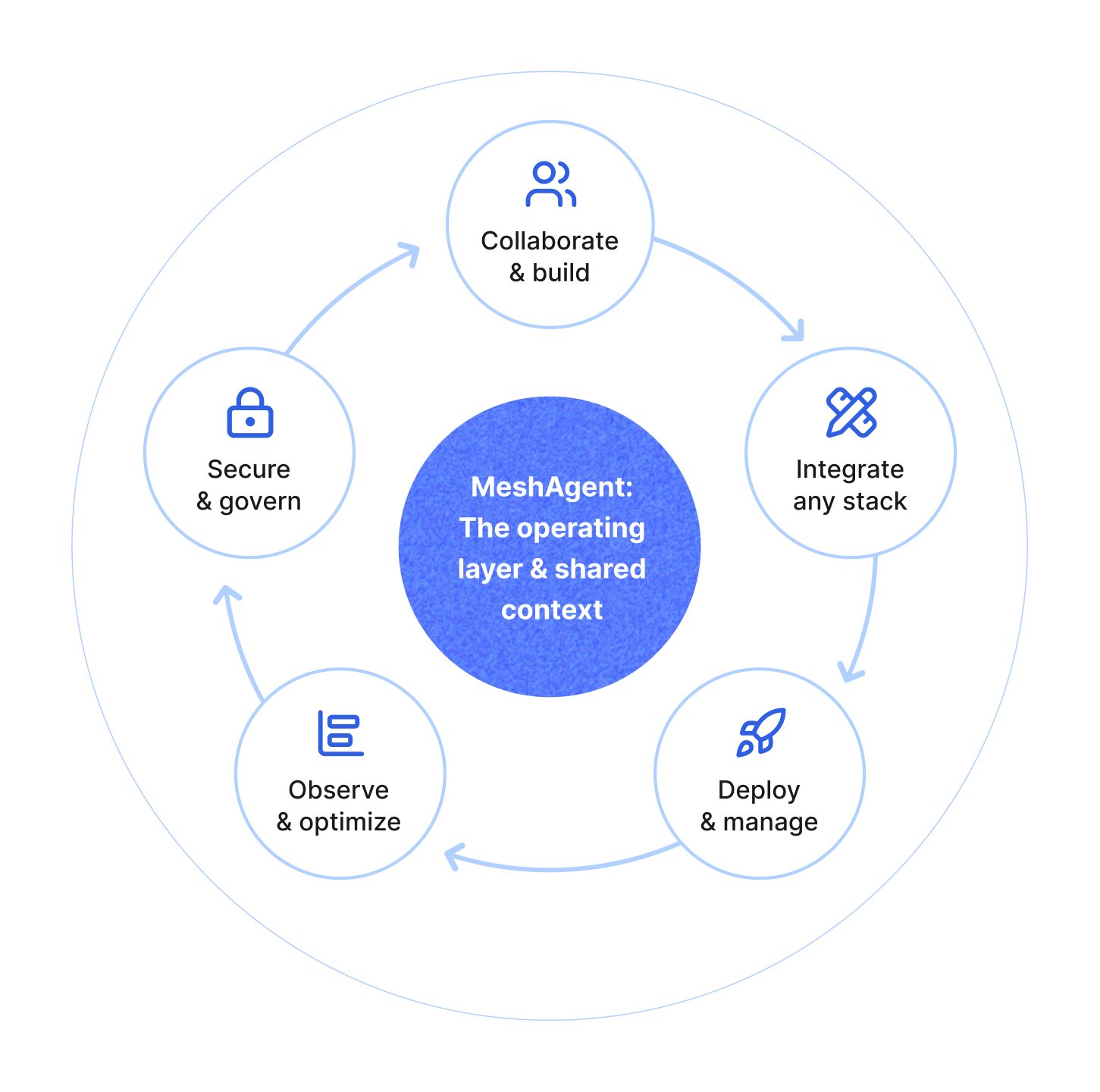
MeshAgent 0.23 introduces YAML + Jinja service templates, file mounts for container configuration, and room member propagation for services. This release makes service templates more flexible and eliminates the need to build custom Docker images for simple configuration and scripting needs.
Service templates now use YAML with Jinja templating. Templates are defined as YAML strings with Jinja variables that get rendered server-side.
This makes templates more flexible and easier to create. You can use Jinja's full templating capabilities (e.g., conditionals, loops, filters) when defining service configurations with variables. This allows for further customization and flexibility when defining services you want to deploy with MeshAgent.
The server now ships built-in templates as YAML and exposes a rendering endpoint so you can preview how templates will look with specific values before deploying them.
Service specs can now define files that get mounted directly into containers. This eliminates the need to build custom Docker images just to add scripts or configuration files by allowing you to paste a script directly into the template that runs at container startup.
This can be useful for tasks such as:
Room members are now automatically listed, written to a mounted file, and injected into the room configuration. Containers receive the members list at runtime so your service can see who's in the room and interact with them as needed.
This enables use cases like sending emails to all room participants, adapting agent behavior based on who's in the room, or coordinating actions across multiple agents.
Join our Discord Server to stay up to date with MeshAgent releases, see full release notes, ask questions, and share feedback with our team.
Check out the MeshAgent documentation to start building today!

MeshAgent Studio, SDK, and Server give you everything to build, test, and deploy agentic applications, from development to production.